

You’re checking your email again. How long will it take them to respond? Don’t they know you’re waiting on them to be able to finish your project? You check Slack. No messages there, either.
You check the job board again at 11pm. No new listings. An hour ago, it was the same thing. It will be the same at 6am, but you check anyway.
These are examples of the Judge bringing its case against you.

The Judge is a concept from Shirzad Chamine’s Positive Intelligence framework. The Judge is the master saboteur, the one that sits in all of us. It is the internal voice that evaluates everything: what you did, what others did, what the situation means. It presents itself as your quality control department. It feels like diligence, like conscientiousness, like staying on top of things. It feels like the thing that is keeping you motivated and moving forward. That is what makes it so hard to catch. The judging feels helpful. It is not.
The Judge Works in 3 Ways
The Judge does not limit itself to one style of judgment. Chamine identifies three: judging yourself, judging others, and judging circumstances.
Judging yourself is the most familiar. It is the voice that says you should be further along by now. That if you had made better decisions, worked harder, seen it coming, you would not be in this situation. It is the voice that notices you have been sitting on the couch for twenty minutes and calls that laziness. It asks what is wrong with you that you cannot seem to just rest.
Judging others feels more like clarity than judgment. The recruiter who hasn’t passed your application forward clearly doesn’t know what she’s missing out on. The team member who keeps making the same mistake after you have explained it three times, the problem is her attitude, not your communication. The hiring manager who went silent after a promising second interview is unprofessional. Each of these may contain a grain of truth. The Judge takes that grain and builds a case.
Judging circumstances often shows up as anxiety. The job market is bad. The timing is wrong. This wouldn’t be happening if it weren’t for AI. What looks like an assessment of reality or discernment is the Judge scanning for evidence that things are as bad as it suspects.
All of these are the Judge’s way of saying, “You need me. I protect you.”
Catching the Judge in the Act
The problem with the Judge is not just that it runs. It is that it runs quietly, underneath everything you are actually doing and saying. Chris Argyris, organizational theorist and Harvard Business School professor, developed a tool to start recognizing your Judge: the left column/right column exercise.1
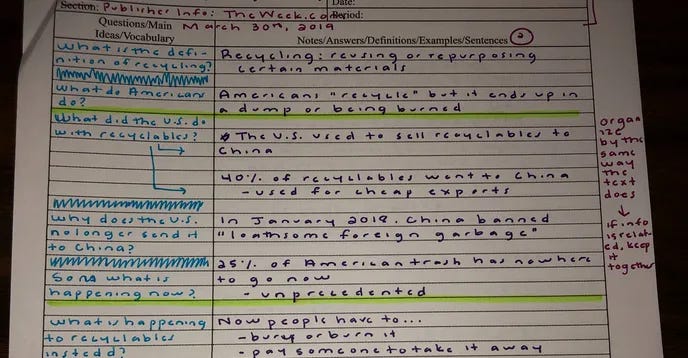
The right column is what is actually happening; these are the facts that anyone talking about the situation would agree to. (Just the facts, ma’am.) What you say, what you do, how you show up in a meeting, a conversation, a performance review. The left column is what is running underneath the facts. The unspoken commentary. The assumptions. The emotions. The judgments. Some examples:
A manager is in a performance conversation with a team member who keeps missing deadlines. The right column: she is stating examples of missed deadlines, asking questions, laying out expectations clearly. The left column: she’s never going to change. I’ve had this conversation four times. I don’t know why I bother. What does this say about me as a manager that I can’t get through to her?
She is presenting a report to senior leaders. The right column: notes in hand, slides prepared, standing up front explaining things. The left column: they’re not paying attention. That one just checked his phone. They’ve already decided. I should have framed the data differently.
The left column is not always wrong. Sometimes it is picking up on something real. But the Judge does not traffic in nuance. It takes what it notices and builds the worst version of the story. And because it is running in the background rather than out in the open, it rarely gets examined. It just runs.
The first step is not to silence it. The first step is to notice it.
The Judge is Not a Reliable Witness
If noticing the left column is the first step, then the second step is deciding what to do with what you find there. That feels much harder, but the silver lining is this - it’s your choice; you are bigger and smarter than the Judge.
The Judge presents its case as fact. It is not. It is an interpretation of facts that has jumped to the worst available conclusion. The team member who keeps missing deadlines may have something going on that has not surfaced yet. The leaders who seemed distracted during your presentation may have been processing, not dismissing. The job market is bad, and it is also true that people are getting hired in it right now.
This is not the same as positive thinking or toxic positivity. You are not replacing one distortion with another. You are asking a more useful question: is this actually true, or is this the Judge’s version of true?
A few questions worth putting to the left column once you begin to notice it:
What evidence do I actually have for this? What do I know to be true in this moment?
What is the most generous interpretation of this situation that I could honestly hold?
If a friend was in this situation, would I tell her what the Judge is telling me?
The Judge will not automatically disappear when you do this. (At least, mine doesn’t.) It will regroup and come back with a revised case. But each time you put it on the stand and ask it to show its evidence, it loses power, gets a little smaller and less convincing.
Reflect
Pick one situation where the Judge has been loud recently. It might be a conversation you keep replaying, a decision you can’t stop second-guessing, or a habit like checking your email or the job board at hours when nothing will have changed.
Write out the right column first. Stick to the facts. What actually happened, what was actually said, what anyone in the room would have agreed to.
Then write the left column. What was running underneath? Don’t edit it. Let the Judge say its piece on paper where you can see it.
Now look at what you wrote. How much of the left column is fact? How much is interpretation? How much is the worst available version of the story?
Act
The next time you catch yourself doing the thing (checking the job board, replaying the meeting, refreshing the inbox), stop and take 3 deep breaths.
Ask: what is the Judge trying to protect me from right now?
You do not have to have an answer. The pause itself is the practice. You are building the habit of noticing before the Judge’s case becomes the only story in the room.
A Last Word
The Judge has been allowed to run unchallenged for a long time. It has never had to show its evidence. It has never been asked whether it is telling the truth or just the worst version of it. So do not fall into the trap of berating yourself when you forget to notice the Judge. That’s just the Judge doubling down! Celebrate every time you catch one of the Judge’s lies or when you notice its influence on you. Soon, those moments of celebration will grow in number and you’ll see change.
Until then, remember, you do not owe the Judge a report. You do not owe it an account of how you spent your afternoon, why you have not heard back yet, or whether you handled that conversation correctly. It will ask anyway. That is what it does. But you are bigger than it. And you get to decide how much say the Judge has in your actions or reactions.
I read about this theory first in the book How Women Rise by Helgesen and Goldsmith.
“The Judge will not automatically disappear when you do this. (At least, mine doesn’t.) It will regroup and come back with a revised case. But each time you put it on the stand and ask it to show its evidence, it loses power, gets a little smaller and less convincing.” This part keeps everything real, and the judge always persists.
I love externilising the thoughts and feelings. That will help us look at it more clearly and let go of guilt that might be associated in dealing with some of the issues brought up.