

A few weeks ago, I was talking with my friend, Kim Herman, PCC from Struggle Bus Coaching, and she asked me: Are you a pain pill or a vitamin? Basically, are you reacting to things that have happened, or are you being proactive to make sure things go the way you want. I want to build on Kim’s metaphor and look at how it applies to us as leaders.
Band-Aid
A negative situation comes up, and you rush to cover it up as quickly as possible so that no one can see the wound. Sometimes, the Band-aid helps the wound heal, but sometimes, it covers a wound that is getting infected without your knowledge.
Where do you see yourself acting as a Band-aid? Maybe you think, “If I cover this mistake up, no one will know that I don’t know what I’m doing.” Your inner Judge is feeding you lies about being an imposter.
When we rush to cover things up, to repair our image, it’s a slippery slope to toxic culture or resentment because a leader was too afraid to have a hard conversation. Since middle managers carry the culture of our organizations1, the way we handle our mistakes sets the tone for the entire organization. Is fear the culture that we want to build?
As a new leader, I often found myself in Band-aid Mode. I wanted to look like I knew what I was doing, especially as a woman leading a team of men (all of whom were older than I). One team member was particularly gracious in helping me to see this default and the way it was shutting down conversation and preventing group troubleshooting.
If you find yourself defaulting to Band-aid Mode, call it out. Your inner Judge is trying to protect you, but in the long run, it causes harm and limits growth. Is there one person on your team or a peer that can help you talk through the latest situation to find a different approach?
Pain Pill
A negative situation comes up, and you figure out how to solve it. This is the most common thing that we see in leadership examples and books. A crisis comes and the leader rises to meet it.
This is the most seductive way to lead. You solve a crisis, and you get immediate praise. You feel valuable and important. But the thing is, there isn’t always a crisis to solve. Without a crisis, how do you get noticed or affirmed?
If you are the only person able to solve a crisis, you’re training your team that YOU are the only person who can find a solution in an emergency. Not only does this dis-empower those you lead, it causes you to run from fire to fire, doing your best to put them all out, until you burn out.
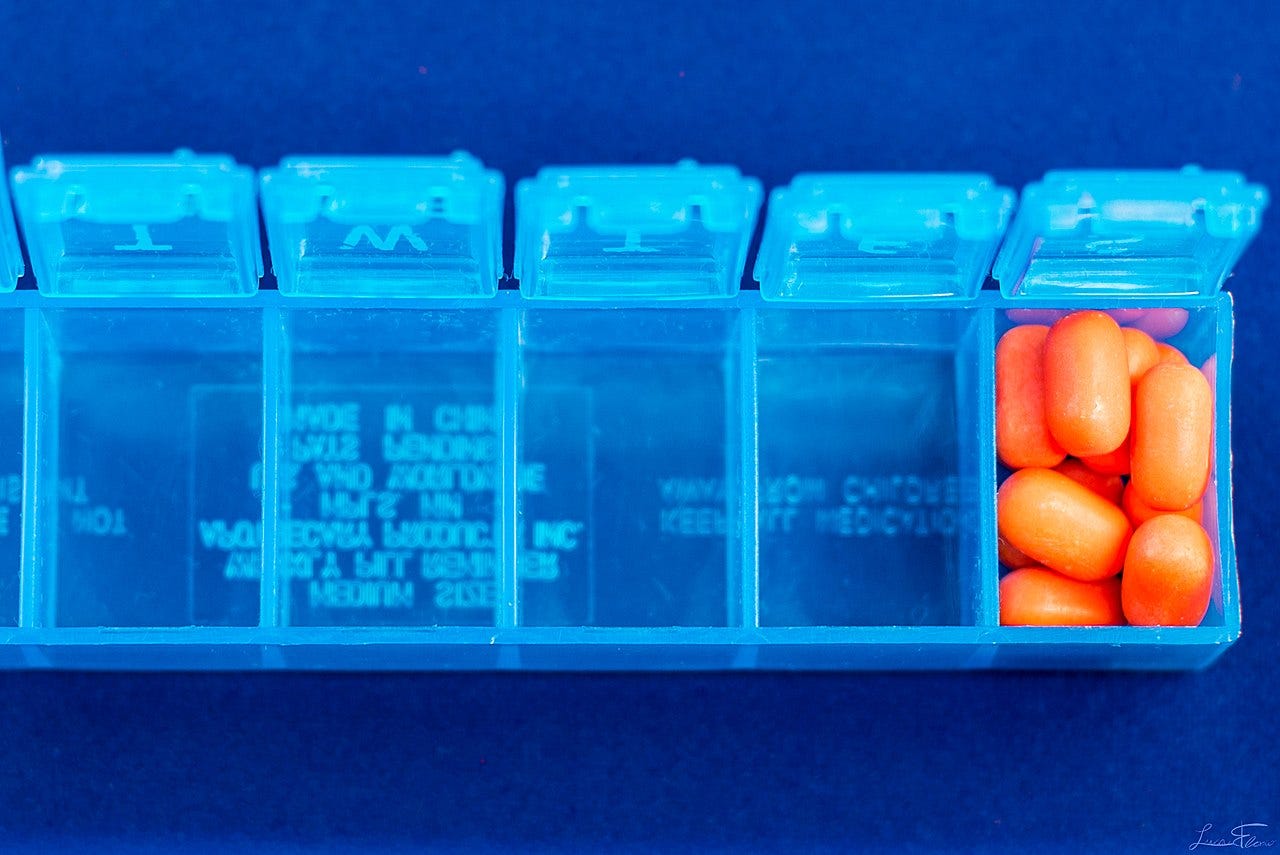
Vitamin
Taking vitamins is boring; it doesn’t feel heroic. It’s just a quiet habit that you do every day (or most days, if you’re me.) The vitamin leader looks ahead and sees potential pitfalls. They listen to their team members who are closer to the ground. They prepare as best as they can but also stay flexible to be able to meet challenges head on.
Leadership can be boring, routine. But consistency builds trust. Clear communication, stated expectations, consistently enforced boundaries. Each of these is a rung in the ladder to trust. The vitamin leader prevents the crisis, so you don’t need the pain pill.
What does vitamin leadership look like in the non-profit world?
One colleague has set up guidelines around the various communication tools at our disposal. We all know that an email to him will be answered in 1 business day, a slack message within 1-2 hours, and a text message immediately. Knowing this helps us to use our judgment in the urgency of our requests.
What does it look like for you in your role? Do you need to be more consistent about sending meeting agendas? Or maybe you want to get into the habit of sharing notes from leadership meetings with your team? What small behavior can you add to your routine that will be a step towards trust?
Reflect & Act on It
We can’t change what we don’t notice. Your only job this week is to observe yourself without judgment (tell your Inner Judge to take a hike).
Look at your last three stressful moments at work.
Did you hide the problem? (Band-Aid)
Did you swoop in to fix it yourself? (Pain Pill)
Or did you prep for it ahead of time? (Vitamin)
Recent data shows that building confidence is the #1 challenge for middle managers.2 Often, we default to Pain Pill mode because fixing a crisis gives us a quick hit of confidence. This week, when you feel the urge to jump in and save the day, just pause. Ask yourself: “Am I doing this because it’s necessary, or because I want to feel useful?”
Coming Up Next Week
Now that you know the three types of leaders, you might be asking yourself:
Is it always bad to be a Pain Pill? Don’t we need crisis management sometimes?
Next week, I’ll share the tale of two explorers. One explorer was the ultimate Pain Pill and the other the ultimate Vitamin. One is famous for a heroic rescue; the other is famous for steadiness. We’ll look at why we celebrate the one while overlooking the other, and how to start exploring your own leadership style.
“82% of middle managers serve as cultural ambassadors in virtual environments, responsible for maintaining organizational cohesion across distributed teams.” from Optimism@Work. The Top 10 Things Middle Managers Desperately Need (But Are Afraid to Ask For). Simon Sinek Inc., 2025.
Optimism@Work. The Top 10 Things Middle Managers Desperately Need (But Are Afraid to Ask For). Simon Sinek Inc., 2025.